




Nettie Taylor: Finally Winning the Weight Battle
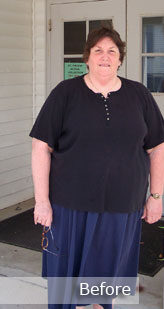
In September 2006 at age 58 I found myself sitting in the parking lot of my favorite fast food restaurant, crying to God to help me with my food addiction. I was stuffing down a sandwich, fries, brownies and a Diet Coke. I had failed again to keep the promise to myself to do something about my weight, but I felt helpless to do anything about it. I felt like I was 98 instead of 58. I weighed 282 pounds.
 My life-long struggle with weight started early on. I remember dieting before I was even in high school. I was taking amphetamines–a popular drug in the 1960’s for weight loss–while still in my teens. They worked, but only with short-lived results. It was during this time that I became truly addicted to sweets and fats. I could eat an entire one-pound bag of M&Ms or a half-gallon of ice cream at one sitting.
Once, in college, I actually went without any food for one week in order to get into a particular outfit by the following weekend. I continued dieting off and on into adulthood, going on the occasional low-calorie diet to get the pounds off. It was during my first pregnancy in 1969 that my weight really ballooned, and before the birth of my second child three years later I hit 200 pounds.
I tried the Atkins diet and lost weight in 1976, but I had no idea at the time how much damage I was doing to my body by following his program. I ate primarily meat and eggs for a year straight until I felt sick and run down and just couldn’t do it any longer. And, of course, the weight quickly came back when I added carbohydrates back into my diet.
For the next 20 years I continued the weight battle. I tried Weight Watchers, TOPS (Take Off Pounds Sensibly), the grapefruit diet, jogging–you name it, I tried it. I also switched to skim milk and began weighing everything I ate with a tiny kitchen scale.
But my compulsive eating only intensified, and my weight climbed higher and higher until I could no longer weigh myself on a regular bathroom scale; the numbers didn’t go that high. Instead I would weigh myself at work on our freight scale. The first time I did this, my heart sank. In 1996 at the age of 48, I saw that I was at 306 pounds.
Finding the Key
In my never-ending quest for help, I picked up Dr. McDougall’s book, The McDougall Program: 12 Days to Dynamic Health. Even though I adored meat and was absolutely addicted to fatty foods, after reading about Dr. McDougall’s plan, his reasons why we get fat and stay fat made sense to me. The health aspects of his starch-based plan appealed to me, and I thought it was important that all of his claims were backed up by decades of research and study. His honesty and concern for his patients was also very apparent. So, meats-and-sweets-lover that I was, in April of 1997 I decided to give his plan a try.
 My husband was not interested in changing his diet, so I decided to go it alone. I avoided all meats and added fats, and ate a lot of the McDougall soup cups for lunches (and I was never without them when I traveled), but I continued using skim milk on my cereal. Meanwhile my cholesterol hovered stubbornly around 200. It wasn’t until I gave up the milk that my cholesterol levels dropped below 160.
The McDougall Plan was so much easier to follow than I thought it would be. I was surprised at the amount of food I could eat and still lose weight. My weight loss was steady and consistent. My doctor was ecstatic about my improving blood pressure and cholesterol readings.
A little over a year after I started the McDougall Plan, I had gone from weighing 306 pounds to 146 pounds, a loss of 160 pounds. I couldn’t believe it; I had changed from someone who was miserable, embarrassed and could hardly move to an energetic, happy woman. I left a 23-year career with the power company to work for my church and was never happier. Prior to losing this weight, I never would have had the courage to make such a drastic change in my life.
A Detour
Then, in August 1998 I was diagnosed with breast cancer. I opted for the lumpectomy and really struggled with the decision regarding chemotherapy and radiation. From my reading, I knew that Dr. McDougall felt that such procedures could be dangerous and of limited value.
But in the end I succumbed to the pressure from my doctors and started on chemotherapy. Despite my decision I had few of the usual side effects from the chemotherapy, except for a little loss of energy. I’m sure this was due to the health-promoting effects of the way I was now eating. I never even missed a day of work during that year.
However, as is usually the case, the chemotherapy drugs played havoc with my blood tests, and I was put on steroids for several months to combat the side effects. The steroids caused a huge increase in appetite, one that I could not fight. At first I added a few sweets, then it was a little meat, and before I knew it my compulsive eating kicked in and I was out of control again. My eating remained out of control for seven long years until that day in 2006 that I cried in the parking lot and begged God for a miracle.
During this time I would receive occasional calls from my doctor’s nurse, telling me in a grave voice how the doctor wanted me to go on cholesterol-lowering medication because my cholesterol was in the 250’s. They also insisted that I take Fosamax due to Bone Mineral Density scans that indicated the beginnings of osteoporosis. I knew I was heading for a heart attack because my chest hurt all the time, and I had numbness and tingling in my feet that pointed to diabetes. I felt sick and miserable and had uncontrollable diarrhea after every meal. I ate and ate and was never satisfied.
 Although I had pains in my right hip that kept me from sleeping at night, I refused to take any prescription medication. I was convinced from reading Dr. McDougall’s books that most prescription medications carried significant health risks and that a starch-based, low-fat diet would eliminate my pains and problems.
My doctor offered to send me to a nutritionist, but I refused to go. All the advice about dieting I received from his office was wrong. It was the usual: dairy products were needed for calcium, “healthy oils,” like olive oil, were recommended, along with skinless chicken, etc. But I already knew from past experience that the McDougall Plan was the safest, easiest, and most health-supporting way of eating in existence. I had lost weight and regained my health with Dr. McDougall once before, and I knew that it was the key to getting back on track.
Starting Over
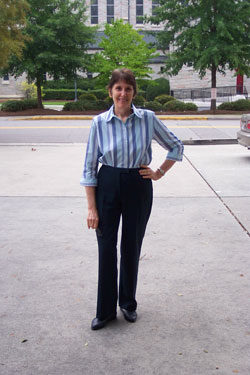
God heard my prayers that day. I was able to get back on the McDougall Plan and stay on it. And now, less than two years later I weigh 133 pounds, having lost 149 pounds. Just this week I bought a size 8 pair of pants. I have never been a size 8 in my entire life!
My blood pressure has gone from 146/86 to 105/64 and my cholesterol has gone from the mid-250s to 163. I’ve even reduced my thyroid medication by half. And I did it all by eating lots of healthy starches, fruits and vegetables. I’ve always been a volume eater, so it is important to me that I never have to go hungry. The McDougall Program allows me to eat until I am satisfied. No more white-knuckled, calorie- and portion-restricted meals for me.
Now I try to ensure that everything I eat advances my health. The recipes from John and Mary’s Quick & Easy Cookbook have helped me in my efforts to stay focused, and the newsletters, DVDs, website forum and Star McDougaller stories help keep me motivated. I am also motivated by the fact that after a very painful gallbladder attack last year, my husband decided to join me on the McDougall Plan. He has lost about 60 pounds and looks and feels great.
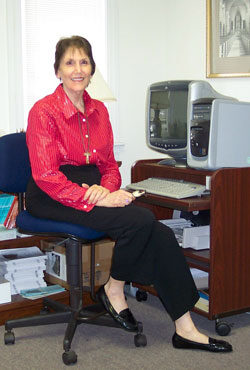 Recently, when I came across my “before” picture, I remembered feeling like a sad and ill woman. At 282 pounds, my face was swollen and I was trying to smile a little. It reminded me of all the social consequences of being morbidly obese, such as missing weddings, funerals, and social engagements because I didn’t want people to see how much weight I had gained.
I now exercise on the treadmill for 30 minutes a day, and the pain in my hip has disappeared. And while the weight-loss and health benefits of the McDougall Plan are terrific, the psychological and emotional payoffs are immeasurable. Now, my being conscious of my weight doesn’t get in the way of everything I do. The self-respect I’ve gained is worth the social cost of eating differently from others.
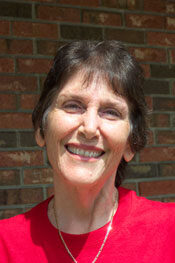
I now feel younger and more energetic than I ever have. My mood is elevated, and I’m no longer depressed. My life is manageable because I don’t resort to bingeing for comfort and tension relief. I simply eat good food and go on with my life. And that’s a wonderful place to be.
Nettie Taylor
Lexington, South Carolina
September 2008
Dr. McDougall’s Comments:
Nettie Taylor, wrote, “I could eat an entire one-pound bag of M&Ms or a half-gallon of ice cream at one sitting.” She has an uncontrollable urge to satisfy her sweet-tasting sensory buds on the tip of her tongue and her appetite. She, like all of us human beings, is physiologically designed to be a carbohydrate (sugar) –seeker and consumer. Carbohydrate is our primary, preferred fuel; unfortunately, food industries know this well and have capitalized on our nature by manufacturing “junk foods” loaded with sugar, but deficient in essential nutrients.
Because most of her previous meals were made of carbohydrate-deficient beef, chicken, fish, cheese, and oil, Nettie left the dinner table hungry, anxious, and unsatisfied. Her unfulfilled needs to obtain pleasure and satisfaction were so powerful that they were totally irrepressible. Her mind quickly latched on to the only carbohydrates in the house, M&Ms and ice cream. She ate. The rewards from these sweet foods were quick and intense, like a narcotic addict’s heroin, an alcoholic’s shot of whiskey, and a smoker’s cigarette.
In addition to being half sugar, to make matters worse, Nettie’s M&Ms and ice cream were half fat. The sugar spiked her insulin production, pushing the readily available fat from those handfuls and spoonfuls of dessert right into her belly, buttock, leg, arm, and face fat depots. In a matter of months she added another whole person—150 pounds—to her body weight, and as long as her carbohydrate sources were candy and ice creams, she stayed obese and sick. The basic metabolism of the body is genetically encoded, and no amount of willpower will ever change the fundamentals of the human workings. Fortunately, the sources of satisfying foods are entirely a matter of choice.
Nettie learned from the McDougall Plan the importance of satisfying her carbohydrate dependent drives with an abundance of starches—rice, corn, beans, sweet potatoes, and white potatoes—with a few fruits and vegetables. Please note how she refers to her diet as “starch-based.” Carbohydrates are found only in plant foods (except for milk and honey). The carbohydrates in fruits are simple, very sweet, and intensely pleasurable, but the satiating effects are relatively short-lived (compared to starches and vegetables). Green and yellow vegetables contain only small amounts of carbohydrates. Starches contain large amounts of complex, slowly digested, delicious carbohydrates, delivering prolonged satisfaction. We are “starch-eaters,” just like cats are “meat-eaters.” (The cat’s tongue has sensory buds for proteins, not carbohydrate.)
Like Nettie, until you discover the central role of starches in your life, you will remain out of control, and likely overweight and burdened with bad health. Once starch becomes your predominate calorie source, then the appetite correctly regulates the amount of calories consumed. The body, as in Nettie’s case, will innately recognize the need to shed excess body fat—and on this proper fuel (starch) it is now able to do so. Because these basic starchy foods contain no cholesterol, adequate protein, little fat, and an abundance of phyto-nutrients, the body thrives, which is reflected in an improvement in risk factors (numbers)—cholesterol, blood pressure, triglycerides, sugar, etc.
Lives are ruined by food, to the same degree, as are the lives of a smoker, alcoholic, or narcotic addict destroyed by their misguided choices. Fortunately, once the truth is internalized, changing to oatmeal, bean burritos, spaghetti, and rice pilaf sets you free to heal and stay healthy; and this change should be far easier than quitting tobacco, whiskey, cocaine, or opiates.
Recommended Articles
Kiki: What a Change Has Taken Place in My Life!!
Emily Overcame Disordered Eating, Recovered Her Health and Lost Weight
Join the Conversation!
Have a question, a helpful tip, or a story from your journey? Add it below - your voice matters.