



Michelle Bachmann: loses over 100 pounds
Chain reactions of good health: Weight-loss leads to improved blood pressure and cholesterol
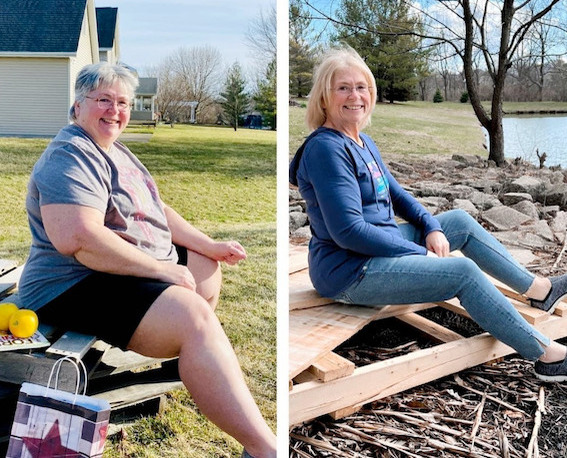
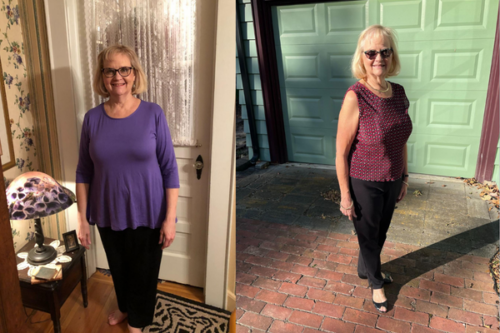
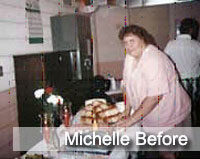 I can empathize with people struggling with obesity, since I have been in their shoes, but I know that obesity is not a disease but rather a lifestyle that cannot be “cured” with pills or surgery. I lost over 100 pounds through diet and exercise, and to keep the weight off, the choices I make each day must support my McDougall lifestyle.
When I tell people my story of weight-loss, I see a look of complete amazement on their faces. I have accomplished something thought by most to be nearly impossible. When they ask how I did it, I tell them “diet and exercise.” They remain interested until they realize I am talking about a vegan diet (eating no animal products at all). This way of eating, they say, is too extreme for them—but a life of pills and surgery was too extreme for me.
I grew up in a small farming community and was overweight at a young age. I started gaining extra weight during kindergarten, and by sixth grade I weighed 220 pounds. Our family used to joke that “God doesn’t make small Bachmanns.” I thought that being big was my fate since most of the people in my immediate and extended family were “built like farmers.”
Despite my weight, I remained active in school, playing sports, such as basketball, volleyball, and softball. While in school I remember having access to pepperoni pizza almost every day. At home my mom prepared meals consisting of hearty “farm” foods. Our meals weren’t particularly extravagant or rich, but they always included meat along with potatoes and vegetables.
When I graduated high school in 1991, I was 5’6″ and weighed 275 pounds. In college, I managed to lose 80 pounds by decreasing my intake of calories and fat, limiting my portion sizes, and increasing my physical activity. I avoided pills, weight-loss shakes, pre-packaged foods, points, fads, gimmicks, and surgery. But after college I took a desk job, stopped exercising, and gained back 40 pounds.
When I was 23, I was diagnosed with high blood pressure and was put on medication. Borderline high cholesterol was also part of my medical maladies. Since being overweight and having high blood pressure were part of my family’s medical history (along with heart disease), I just figured that it was my time, even if I was only 23.
I continued to try and lose weight by reducing my portions and exercising, but during this time I also became intolerant of meat. At first it was beef, then pork and finally chicken. They all made me feel sick to my stomach. I began to eat more fish instead, but ended up developing a strong dislike for seafood as well. So I became a lacto-ovo vegetarian, and continued to eat dairy foods and eggs, but no meat or fish.
My father also has Crohn’s disease, a chronic inflammatory condition of the small intestines. With the digestive issues I was having, I thought that I may have inherited a digestive system condition, such as IBS (irritable bowel syndrome) from him. The change in my diet (eliminating meat and fish) helped relieve my digestive system issues. However, even after this shift my blood pressure and cholesterol remained elevated.
Eliminating all animal foods
Then, about three years ago, my husband and I were getting ready for our yearly vacation, which meant it was time to pick up a new book to read while at the beach. By chance I came across The China Study by T. Colin Campbell. It discussed the effects of diet on disease, and it was a page turner! The book also mentioned Dr. John McDougall’s approach to disease and weight-loss. I then visited the McDougall website and picked up his book Twelve Days to Dynamic Health. His approach made sense to me, and since I was almost a vegan already, making further changes to eliminate all animal products did not seem too difficult.
A few weeks later, I went to a new doctor to refill my blood pressure prescription. I talked to her about what I had read in The China Study and Twelve Days to Dynamic Health, but she didn’t want to listen to me. She told me that I’d be on medication for the rest of my life, and that at some point I would probably be taking a combination of two or three medications a day. Needless to say, I haven’t been back to see her.
 I then talked with another doctor about my high blood pressure. He agreed to let me go off my medication if I monitored my blood pressure from home; but if it went up, he’d refill my prescription. However, after changing my diet, my blood pressure dropped to normal within five days. I no longer had to take hypertension medication, which I had been taking for nine years.
Nowadays, with regular exercise, I have noticed that the effort needed to maintain my weight is minimal (I now weigh 170). When I stopped eating dairy and eggs, my total cholesterol also dropped by 60 points to 170 (over a span of two years).
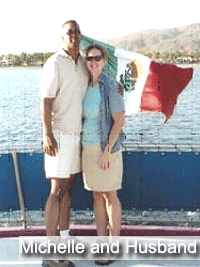
My husband has not switched to a McDougall diet, but he has moved away from the Standard American Diet (SAD). His blood pressure is down, but not his cholesterol. We both understand the affects diet has on health, but for me a vegan diet was the only way to get my health issues under control. My husband supports that and is proud of my accomplishments. If I eat foods that are part of the Standard American Diet, such as processed sweets and dairy foods, my stomach problems return and my blood pressure begins to inch up again (and so does the scale). Why would I want to play with my health?
I love to cook and bake, and I enjoy trying new recipes that are part of the McDougall lifestyle (it’s also fun to take existing recipes and give them a McDougall twist). If you like to experiment, start with some of your favorite casserole recipes and replace the meat with a can of drained and rinsed beans. There are several recipes you can try on Dr. McDougall’s website as well as McDougall-partnered websites.
I got to be 275 pounds for a reason: I love to eat! And my love for eating has not changed with my weight-loss. Fortunately, if you are eating the right foods, weight gain is rarely an issue. I tell people who are looking for an inexpensive weight-loss program to try the McDougall program. A plant-based, low-fat diet and a pair of walking shoes will get you started quickly. In addition, clean out your refrigerator, freezer, and cupboards. Do not keep the wrong foods in your home (this is especially important if you’re an emotional eater).
Obesity has shaped my life, but it no longer shapes my body. I am going to keep on doing what I’m doing, and hopefully when people I know are ready, they will come back to ask me what the McDougall lifestyle is all about. And maybe we can even exchange some recipes!
Michelle Bachman
Las Vegas, NV
January 2008
Dr. McDougall’s Comments
“I need to eat less,” is the universal solution I hear from everyone I meet who is overweight and trying to lose. My thought is “I bet you can’t (eat less).” The hunger drive is one of the three basic drives that keeps us alive—thirst and breathing are the other two. Singular choices of water and oxygen satisfy these two survival drives. Where hunger is concerned there are infinite choices from anchovies to zucchini. Here lies the opportunity: intelligent choices.
The most important nutritional nugget of knowledge that I can teach people looking to lose weight permanently and regain lost health is to change the composition of the food on their plate. This is exactly what Michelle Bachman did over a period of three years. She went from a meat-centered diet to a seafood-centered diet to a dairy- and egg-centered diet to a plant-food centered diet—more specifically to a diet based on starchy vegetables with the addition fruits, and green and yellow vegetables. Finally, she realized the importance of avoiding free-fats derived from plants; for example, corn and olive oils. Her journey is typical (and actually one I took 40 years ago).
She never controlled her appetite. She clearly says, “I love to eat! And my love for eating has not changed with my weight-loss.” Enjoying food is a requirement for human survival and that can never change. However, every one of us has the capacity to learn to love foods that promote health—being trim is one characteristic of a healthy person.
Food preferences are strong. People reacted to Michelle by remaining interested in her fabulous recovery until they realized she was talking about a vegan diet, and then they told her that this way of eating was too extreme for them. This is a universal response. Food preferences are individual. If Michelle’s friends had, instead, been raised in another part of the world—say in rural Kenya, Japan, or Peru—then they would express the same intense preference for their native foods—millet, beans, rice, and potatoes.
Food preferences are learned. Adaptation to the enjoyment of a meal plan that guarantees loss of excess body fat and restored health is simply a matter of exposure. Mary encourages people desiring change to look over some of her 2500 published recipes and then choose those with familiar ingredients—if you have always loved pasta then choose spaghetti, lasagna, and pasta salads, if you like potatoes then choose hash brown potatoes, potato pancakes, or potato salads. Add favorite spices. People tell me “I would eat cardboard with Tabasco sauce.”
Once learned, a meal plan composed of McDougall foods becomes habitual and favored. Thus, the changes become permanent—I mean all changes, including preferred foods, physical appearance, function, and feelings of wellbeing. Like all of the other constructive changes that you have made before, you will be looking back and thinking, “Why did I wait so long?”
Recommended Articles
Syd Wyemann: My Hands Were Crippled With Arthritis

Cathy Lost 50 Pounds Since Attending the 12-Day McDougall Program
Join the Conversation!
Have a question, a helpful tip, or a story from your journey? Add it below - your voice matters.