



Joyce Rainwater: Overcoming Obesity for Good
“I knew I wanted to eat differently than I ever had before because I wanted a different outcome.”
—Joyce Rainwater
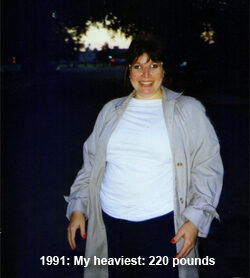
 “Somebody help me. Please, tell me what to do. I’ll do whatever you say. Just please, help me,” I cried aloud in despair, arms reaching upward for mercy. There I stood, alone in my apartment’s small living room one dark and rainy Saturday afternoon in February, 1991. At 46 years old and 220-pounds (on a 5’4″ frame), I was locked in a destructive cycle of binge eating and strict dieting. I had become my grossest, loneliest, most hopeless self. I was exhausted by the battle with weight I’d been fighting since age 18.
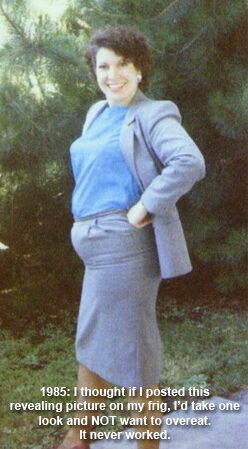
As a chunky child, I was praised by my mother as a “good eater.” I remember being overly excited about food, asking for my siblings’ dinner leftovers and being perplexed at how friends were able to resist eating all of their Halloween candy in one day. But I was also an active child, which prevented me from becoming overweight; that started during college. Instead of gaining the “Freshman 15,” I gained 30 pounds before coming home for Christmas break.
During college and the years that followed, I’d often go on diets, but they never worked for long. Toward the beginning of my dieting I tried those fudge-like diet candies called “Ayds,” and would eat one before each meal to curb my appetite. However, they didn’t work for me since it was too easy to eat the whole box in a single sitting. So, I’d go on a strict diet to compensate for taking in so many calories, and thus began the cycle of binging and fasting.
After my two children were born, I gained even more weight, eating lots of cheese and dairy foods (pizza and ice cream were favorites). Unlike my mom, who cooked from scratch and had a knack for moderation, I regularly took my kids to McDonald’s and 31 Flavors. My blood pressure crept up and my energy level went down, and though I never went to the doctor for help or took any medication, I knew I needed something.
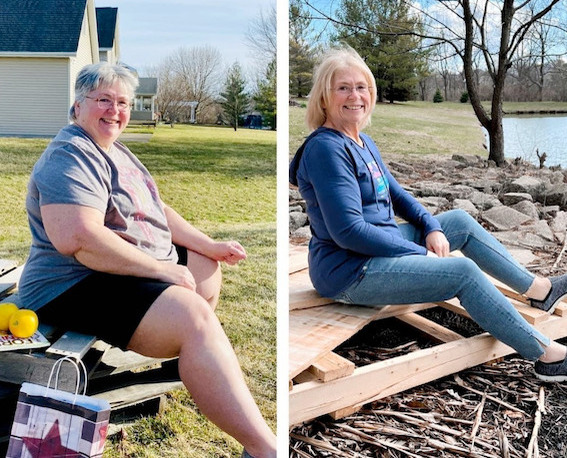
But on that desperate, rock-bottom day in 1991, as I begged heavenward for help, little did I know that only ten months later I would be transformed into a 110-pound, size-4 woman about to move out into the world and meet my future husband. Nor would I have imagined that 18 years later I would still be trim. It all started with a promise I made to a concerned friend who happened to call me on that Saturday: I promised her that I would attend an Overeaters Anonymous (OA) meeting.
Empowered self-responsibility
At OA, something miraculous happened. As I walked into the room, feeling frightened and ashamed, I immediately felt a weight lift off of my shoulders (no pun intended). Though I didn’t talk to anyone, and no one talked to me, I felt that I was no longer alone. I related to the speaker’s story of struggle with overeating, and after that first OA meeting, I began going to meetings daily instead of binge eating alone in my apartment. I never got an OA sponsor, or made many OA friends, or completed the 12 steps, but I did listen and learn, and I began reading about nutrition, motivation, behavior theory, psychology, and physical fitness.
 Someone did show up to help me, as I had fervently prayed for that saving Saturday—I showed up. I rescued myself. Instead of being a helpless, hopeless, childlike victim begging, “Please, somebody, tell me what to do,” I went from a state of learned helplessness to one of empowering self-responsibility. I became a thinking, analyzing, responsible adult making decisions for myself about what to do in order to get out of my obese situation.
Hitting this lowest point propelled me to action—my pain and misery were just too great. This combined with the promise I had made to my friend (my self-esteem rested on keeping that promise to her) were my two biggest motivations to change. As time went on, I made and kept other small promises to myself, such as, “I promise I’ll attend an OA meeting whenever I feel the urge to overeat,” “I promise I won’t binge eat today,” and “I promise I’ll walk today.” I came to trust myself to keep these promises, finally realizing that I was worthy of trust.
But you could also say that Dr. John McDougall showed up to help me. The McDougall Plan was among the many books I read in my quest to figure out how I could change my life. I came across the book in my local bookstore’s “Diet and Nutrition” section, where I’d often browse during my dieting phases. From the first page, I was hooked, as I learned that my understanding about proper nutrition (courtesy of the meat and dairy industries) was all wrong. I learned that the rich Standard American Diet (SAD) was “pathogenic,” which means that it is disease-causing. I knew I wanted to eat differently than I ever had before because I wanted a different outcome.
I followed Dr. McDougall’s plan using the recipes of Mary McDougall that I found in The McDougall Plan and The McDougall Health-Supporting Cookbooks, Volumes One and Two. I also devised my own recipes as my tastes adjusted to a plant-based diet. During that time I never added a drop of oil or margarine, or ate high-calorie nuts or seeds, which is to what I attribute my very fast weight loss. I also ate high-fiber foods at every meal to keep myself full, including whole grain pasta, bread, cereal, brown rice, beans or lentils. And I converted my favorite meals into vegan versions, such as sloppy joe lentils and garden burgers.
I also discovered the zest of citrus, adding fresh-squeezed lime juice to baked sweet potatoes or on an ear of corn. The zing of the lime complements foods so well that no butter is needed. At the end of every meal, for sweetness and to signal the end of eating, I’d have a few raisins. I also promised myself that I’d never eat anything I didn’t like. I knew I wouldn’t stick with it if I had to force myself to eat unpalatable food. My body immediately responded to taking in such nutrient-rich, low-calorie foods. My energy level increased as my weight decreased.
My family and friends were skeptical at first. When I started my program, my sister Jean said, “Oh, Joyce, you’ve got more than 100 pounds to lose, it’ll take you forever. You’ll go off this diet long before then.” But I responded with complete confidence: “It doesn’t matter how long it takes, because even after I lose the weight, this is how I’m going to eat and live from now on.” I knew I was making a permanent lifestyle change. How long it would take became irrelevant with this approach. If I couldn’t sustain the change for the rest of my life, I didn’t want to waste my time trying it.
Today, everyone knows that I am vegan, and they gladly accommodate the way I eat. But I never push my choices on others. My husband, for example, is not vegan, though he eats my whole grain spaghetti with marinara sauce and often has fruit for dessert, after my example. He very proudly tells people my story and seems to be moving in my direction, eating more and more salads, and vegetable soups and stews.
Building on a healthy foundation
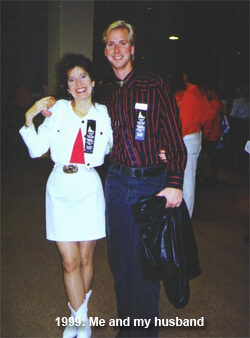 My vegan diet is the foundation of my healthful lifestyle today, but I have also made other changes. I began exercising regularly, walking daily, then after a month, joining a gym (first walking on the treadmill and then taking aerobics classes after another month). Eventually, I earned three fitness certifications from the American Council on Exercise: Group Fitness Instructor, Lifestyle and Weight Management Consultant, and Personal Trainer. Today, I’m an aerobics instructor and a yoga teacher. Regular exercise is absolutely one of the keys to maintaining my weight loss.
At first, I didn’t know that I’d learned the secret of permanent weight loss. It takes time, after all, to prove permanence. Gradually, though, it became clear that these methods work. Others got heavier while I remained trim. Remarkably, the one with the lifelong weight issue turned out to be the one to maintain her weight loss. I, the “disordered eater” for whom eating is still the greatest pleasure and food the greatest temptation, have succeeded where others have failed.
To help maintain my weight loss, I devised six tools to stay motivated. I call them the “Six Kicks“. They are “velvet hammers” that “check” me in the choices I make along that fine line between controlling weight and letting it control me. We each need standards high enough to get results, but we don’t want to adhere to them so rigidly that we become fanatical, obsessed, or humorless.
The Six Kicks are firm but flexible governors of behavior that can help us be vigilant without becoming victims of the diet trap. They bring us into a state of psychological readiness to overcome daily challenges to our resolve. For example, Kick 1 is “Own Your Weight Fate,” meaning take responsibility for the choices you make. It’s the first step in rescuing yourself. Followers of Six Kicks stay mindful of:
- their surroundings (an environment which doesn’t support weight loss because it bombards us with messages to eat while pressuring us to be thin),
- the problem (the Standard American Diet and a sedentary lifestyle),
- the solution (lifestyle changes that we can maintain day after day, not dieting),
- themselves (we must be different than the average American, 67% of whom are overweight or obese), and
- their goals (to focus less on food and eating and more on health and well being).
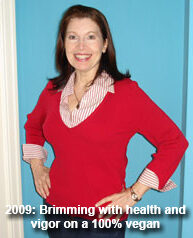 Knowing how painful it is to struggle with weight, I now share my success with others and help them achieve permanent weight loss. Today, I work as a motivational speaker and weight-control advisor, sharing my story and insights in seminars, workshops, support-group sessions, and individual counseling.
To anyone struggling to lose weight and keep it off, I can tell you there is a way to lose weight permanently. It takes no special talent or intelligence. Once you have the facts, such as those presented in The McDougall Plan and in the Six Kicks Academy, you can formulate a set of strategies and techniques that work for you, transforming yourself into a healthy and energetic person. If I escaped the prison of food obsession and obesity, you can too!
Joyce Rainwater
Sacramento, CA
July 2009
Dr. McDougall’s Comments
The first book Mary and I wrote was called “Making the Change,” because, as Joyce so clearly documents, change is what permanent weight loss and excellent health is all about. There are many parts of our lives that we have little or no control over: our bosses dictate pressures from work, our family’s troubles appear beyond reason or solution, and world chaos always looms over our heads. But there are two parts of our lives we can regulate 100%: the foods that pass our lips and whether or not we exercise. Even as the sky is falling all around us, we can choose a couple of baked potatoes over French fries, water over fructose-filled soda, and a daily walk over the sofa.
I did leave out one important stumbling block: many people really don’t have choice because they don’t have the truth. They live by “nutrition facts” created by industry and spread by advertisements; such as, lose weight by eating yogurt, fish is the secret to a healthy heart, meat is a necessary protein source, and starches are fattening. Even if any of this rhetoric were true, it is obviously not working for the two-thirds of US citizens who are overweight and/or obese—and ill. A new set of rules is needed; one that has worked for eons for all of humanity:
1) Throughout human history all successful populations of people have lived on starch-based diets and every one of these people was trim and avoided diseases that plague modern societies today.
2) Aristocrats of old ate foods like those served now at Burger King and Dairy Queen. Rich foods always have and always will make people fat and sick.
Combine only these two simple thoughts and you now have the secret to super health and life-long weight loss. You would think with just one thing to change—the kinds of foods on a person’s plate—everyone would succeed. But obviously this is not true and there are pieces of the behavioral puzzle yet to solve.
Take some lessons from Joyce Rainwater at her web site at www.mysixkicks.com. Adding a support group such as Overeaters Anonymous or Weight Watchers can be beneficial. Spend time on the McDougall Discussion board. The Maximum Weight Loss forum just announced (August 7, 2009) a 1000-pound collective weight loss since the beginning of the year. Attend a local athletic club or vegetarian society meetings. Get friends or family members to join you. Surround yourself with the truth to become insulated from the lies of special interests.
It takes a long time and hard work to give up destructive habits. In the process the mind plays tricks. People believe calories consumed after dark don’t count and a little bit won’t hurt. The three most common reasons I have observed for lack of progress in losing weight are: eating out, consuming “healthy” vegetable oils, and allowing too many high-fat plant foods (nuts, seeds, avocados, olives, soy). The body is going to move those fat calories into the fat storage banks (thighs, abdomen, buttock, etc.) effortlessly—and here they will remain until the person’s diet becomes really clean. Then without a thought, prayer, or lucky charms, the body sheds pounds and diseases. Stop looking elsewhere for the answer—the McDougall Plan is the only way to become both trim and healthy for a lifetime—and it’s free.
Recommended Articles
Donna McFarland: Diagnosed with MS; Food Became My Medicine
Lars P. Lidberg: Painful Arthritis, Cholesterol

Join the Conversation!
Have a question, a helpful tip, or a story from your journey? Add it below - your voice matters.