




Darrell Woodruff, MD & Norma Woodruff
“Threat of diabetes and heart disease steers couple to great health”
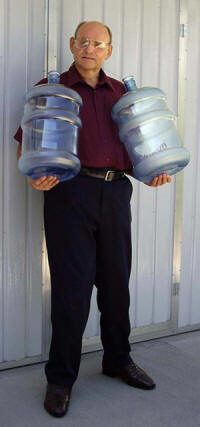 Have you ever tried to lift a five-gallon jug of water? It isn’t easy. If someone handed you one and asked you to carry it around 24 hours a day, could you do it? How about two jugs? Well, that’s what I was carrying around with me in extra weight. But after following the McDougall Program for over a year now, I am happy to say that I am no longer carrying those two jugs (a total of 80 pounds).
Our journey to this point started the day my lovely wife Norma came home from a visit to her internist with fear in her voice: “The doctor told me that I will need to start insulin injections very soon if my blood sugars don’t improve.” We both needed to lose weight at that point, and the internist told us the only chance we had was to go on the South Beach Diet. But I knew enough to know that there must be a better way.
In our search for a better way, we attended an American College of Lifestyle Medicine meeting in Ontario, California. Fortunately for us, Dr. John McDougall was one of the many excellent speakers that day. Norma listened carefully as he explained to the audience of health professionals that many diabetics can lose weight, avoid insulin injections, and even get off medication if they eat the right food. That sounded good to us; we both knew it was time to make some major changes.
 After Dr. McDougall’s talk, we approached him and mentioned that we were considering attending one of his 10-Day Programs in the future. He said, “Why wait? We have a program starting next week.” We were in Santa Rosa the following Friday, the first day of the 10-day program.
As a retired physician, I thought I was already following a healthy lifestyle and eating the correct foods. Medical school had taught me the biochemistry of how nutrients are metabolized, but not much more. I knew it was wise to avoid saturated fats and to get enough protein and fiber, but as I listened to Dr. McDougall’s talks throughout the 10 days, I knew that I had been wrong all these years about what constitutes healthy eating. I was most surprised upon learning that egg whites, skim milk, and isolated soy protein were not health-promoting. Norma and I had followed a modified Pritikin program for quite some time, which had allowed these items, and we had thought they were fine.
I find it hard to describe the 10-Day Program to those who have not experienced it. It is a total immersion into eating delicious low-fat, plant-based foods, along with exercise, education, medical care and much more. We also felt great camaraderie with our fellow attendees. The 10-Day Program seemed like a big financial investment at the time, but there is no question that we got our money’s worth. I asked Norma at one point, “Wouldn’t you trade anything you had for good health?” We both agreed that we would.
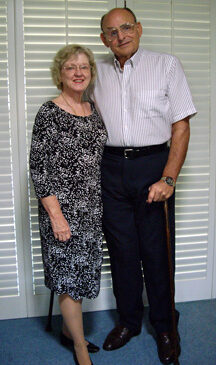 Both of us have had several medical problems in recent years. Norma’s diabetes gave her the most concern. Her fasting blood sugars were running about 200 while she was taking maximum doses of oral medications (which had significant side effects). She was beginning to experience increasing neuropathic pain in her feet. Could other complications be far behind? On the first day of the 10-Day Program Dr. McDougall took her off of all of her diabetic pills. Within a few short weeks her fasting sugars were down below 150. They have continued to improve even more since then. The neuropathy has certainly not progressed and may have even improved a little. She no longer fears other complications.
Yes, we have the usual stories of lowered cholesterol, no more heartburn, improved elimination, more energy, better sleep, reduction of blood pressure and so forth, but the one thing that really surprised me was that I now wear a full size smaller hat. (Please, no fathead jokes.) My cholesterol was high enough (261) that the internist had started me on statin drugs to lower it. The numbers improved a little, but the muscle pains and tingling in my fingers convinced me to stop taking them. Now, without medication, my cholesterol is less than 150, and my triglycerides dropped from above 400 to 68.
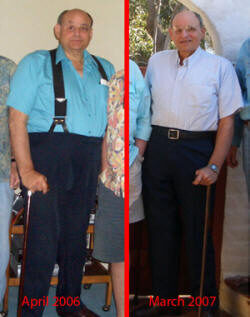
I have struggled with my weight ever since I was in high school. I was 6’1″ and weighed 240 pounds before I graduated, and the weight seemed to inch up almost every year after that. In 1965 I was in an airplane accident that left my legs partially paralyzed. That limited my activity and made any kind of exercise program very difficult. I became so fat that my belt could no longer keep my pants from sliding down past my ample belly, so I resorted to suspenders. As my weight topped out well above 300 I found it very difficult to walk 20 feet to the end of the driveway and back. Now that I weigh in the low 230s, I enjoy walking about two-tenths of a mile every day; and Norma walks more than half an hour every day.
In the past year, we have read a few dozen books and watched many hours of videos to add to our understanding of good health. We found a couple of books to be especially helpful and informative. After returning home from the McDougall 10-Day Program, we read The China Study by T. Colin Campbell. This easy-to-read and well-documented book cemented our belief that what Dr. McDougall had taught us was valid. Campbell makes his points so clearly that it would be difficult to read his book and not believe his statements linking the foods we eat with our health.
In addition, the book McDougall’s Medicine is long out of print, but one can usually find used copies on the Internet. Dr. McDougall had a clear understanding of the concepts long before the excellent reports of Campbell, Esselstyn, Ornish, and others. Even though Dr. McDougall wrote the book more than 25 years ago, physicians and other health professionals could (and should) use it as a textbook of medicine. If I had read it when I was still practicing medicine, I would have known how to actually help my patients.
I try to share my experience with other physicians I see around the hospital, but it disappoints me that most of them believe that eliminating animal foods could not possibly be healthy, for themselves or for their patients. In addition, physicians often lack the time to thoroughly study the materials that would convince them otherwise. It’s unfortunate that even when a physician does believe that lifestyle changes benefit patients, finding time for individual counseling in a busy practice can be very tricky.
Norma and I realize that eating and other lifestyle habits are very personal, and we do not expect anyone to make drastic changes based solely on our beliefs and experiences. However, we want people that we care about to have enough information to make informed decisions about their health, and we hope they see that traditional medical interventions may not be the most effective path to good health. Many factors make a person decide to change. Fear is certainly motivating, but is not sufficient alone: a person needs a passion for life in order to change.
Our newfound health excites us, and we wonder why we had not learned about these principles before. We find it difficult to understand the reluctance that most people have in accepting the concepts that are so clear to us now. Most people believe they could not give up meat and other animal foods, or they think it is too late for them to make changes. We often hear, “I am already eating a healthy diet,” even though their diet still includes animal foods.
Information is readily available through books, videos, lectures, live-in programs, etc. There are programs that cost money (the best money we have ever spent), or you can obtain the information on your own for very little investment. There is so much convincing information available that it is simply overwhelming.
Ten days is a good start for regaining health, but we have much more to learn. We will continue to attend lectures, read books, and watch videos. We are happy to have found a way of eating that reduces our chances of developing heart disease, diabetes, many cancers, and that improves a host of other medical problems. From this point forward, we are life-long McDougallers.
Darrell Woodruff, MD
Montrose, California
Dr. McDougall’s Comments
Medical doctors, dietitians, nurses, chiropractors, and all other allied health professionals should be the first ones to change their diets and lifestyles. They are on the frontlines, having daily encounters with patients with heart attacks, strokes, cancer, and diabetes. The physical, emotional, family and financial burdens are painfully real for them. No matter how hard these educated experts try, no matter how much money is invested, these dedicated professionals witness the downward clinical courses for their patients—none regain their health. Something is seriously not working and they should admit it, at least to themselves. So why don’t they change the way they practice? Or at least change their own diets so they can save themselves? The obstacles that keep health professionals from making long overdue changes range from ego to legal.
Here are some of the reasons for their inertia:
1) Recognizing that the root of most illnesses is diet and lifestyle runs counter to everything they learn in school. No surprise; training nurses, dietitians, and doctors receive their education from industry—to be specific, the food, device, and drug industries. These companies pay for the scientific research these health professionals rely on and they also pay for their ongoing education. Otherwise highly intelligent, these experts are too naive to believe they could be fooled, and lied to for profit.
2) Recognizing diet as the cause of common health problems forces health professionals to make personal changes, and most are not ready to give up their cheese omelets and pepperoni pizzas. Every medical meeting I have ever attended serves high fat and/or high cholesterol foods to the attendees—and they eat it. Observe the physical appearance of these health experts—fat and sick.
3) The fear of malpractice suits keeps most professionals from doing the right thing—even after they know better. The ultimate judgment given out in a medical malpractice suit is based on the “community standard of practice.” As long as you harm the patient in a manner similar to your fellow doctors, you are vindicated in the eyes of the law. Many doctors have confided in me that they would be afraid to recommend dietary changes and to eliminate medications because of the criticisms from their colleagues and the sanctions by the courts that might follow if something went wrong.
4) When doctors, who are the “ultimate deciders,” finally recognize the truth, they are faced with the painful admission that their prior practice has been wrong and they have often caused serious harm to their patients. That’s a powerful confession too few people can make to themselves or to others.
5) Patients, also known as the customers, usually want pills, surgery, and other quick fixes—they know no better options. Health professionals offering effort-requiring diet and lifestyle changes are not welcomed by the majority of customers.
6) Education takes hours of interaction between the health professional and the patient. Insurance companies pay a standard fee for a “visit”—whether 7 minutes is spent writing a prescription or an hour is spent teach something life-changing. Under the current system, lifestyle medicine does not promote financial success. (However, there are methods of practice that will allow energetic experts to build highly successful businesses around doing the right things for people.)
Darrell Woodruff, MD is a notable exception in healthcare—he changed his diet with resulting medical miracles for himself, and he admits that if he were still in practice he would change the kind of care he would deliver to his patients. Most students entered the health professions with a sincere desire to help others. But along the way their missions were diverted by big money and big egos—and by a failure to have effective tools that really help their patients—drugs don’t cure dietary diseases. With dissemination of the truth these days, many students, medical doctors, dietitians, nurses, chiropractors, and other allied health workers are realizing the powerful benefits of lifestyle medicine and moving on to far more rewarding careers.
Recommended Articles
The Four of Us Agree: “It’s the Food®”

Bob & Fran: How a Plant-Based Diet Saved Our Lives - Literally

Join the Conversation!
Have a question, a helpful tip, or a story from your journey? Add it below - your voice matters.