




How to Keep Your Arteries Clean and Reverse Atherosclerosis
By John McDougall
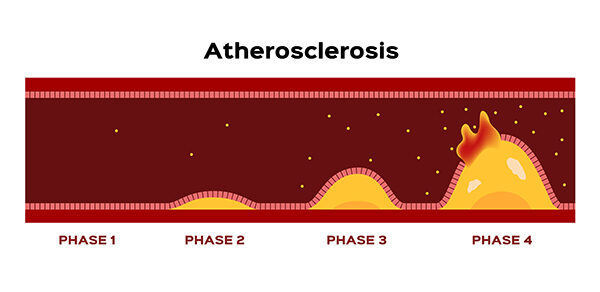
1) All stretched out, you have 60,000 miles of blood vessels in your body. Your diet will affect the health of every inch of every vessel from your scalp to the soles of your feet. Bathe the arteries with the unhealthy blood, which results from an unhealthy diet, and the vessel walls will stiffen within minutes. Over weeks to months, streaks of fat accumulate in walls. As the disease rages on, the walls sometimes thicken enough to compromise the flow of blood.
2) Many diseases are caused by compromising the flow of blood to various tissues. Close the arteries to the brain and you have a stroke; to the eye, macular degeneration; to the inner ear, hearing loss, tinnitus (ringing), and vertigo (dizziness); to the heart, myocardial infarction; to the kidneys, renal failure; to the leg, gangrene; and to the penis, impotence.
3) The effects of diets are very complex and the only accurate statement is: “the rich Western diet is the cause of artery disease and a starch-based diet with vegetables and fruits is the prevention and cure.” Many damaging components of the rich Western diet have been identified, including oxidized cholesterol, antibodies to dairy proteins, animal protein, and fat. Some healing components of plant-foods are plant fats, fibers, sugars, proteins, antioxidants, and other phyto (plant)-chemicals.
4) When the blood flowing through the arteries is unhealthy, “sores,” (con- sisting of “pustules” and “ulcers”), form on the inner surfaces. Think of these pustules as being like pimples on a teenager’s face—filled with necrotic, semi-liquid debris and white blood cells. Sores are continuously forming and healing throughout the miles of arteries. Unfortunately, because injury from the fork and spoon outpaces the body’s healing capacities, the overall disease progresses. In the later stages of healing, when the disease is severe, the sores become fibrous stable bulges, called plaques. In most cases these rock-hard plaques cause the patient no trouble at all. However, some plaques become large enough to interfere with blood flow—causing chest pain (angina) and the problems mentioned above.
5) Most heart attacks and strokes are not caused by the slow build up of fibrous stable plaques—but are rather events of rapid onset. The trigger of such events is the sudden inward rupture of a tiny pustule. With this rupture, the inner contents of pus and associated “products of tissue injury” are released into the flowing blood, and the body reacts by forming a blood clot which can immediately interfere with the flow of blood. When the blood clot (medically called a thrombus) completely occludes the artery, the tissue that lies downstream of the clot (such as the heart muscle or brain) usually dies. The event is called a heart attack (coronary artery thrombosis) or stroke (cerebral artery thrombosis).
6) Angioplasty is performed over 1 million times annually in the US. During this surgical procedure a balloon-tipped catheter is passed into an area of severe artery obstruction. Inflation of the balloon bursts the fibrous plaque, which is the intention. But an unwelcome consequence is that this “plaque rupture” releases “products of injury” which cause the formation of artery occluding blood clots. As a result, half of the arteries so treated become completely closed down within 5 months of surgery. One potential solution to this expected complication has been the placement of a wire mesh stent to prop the artery open after bursting the plaque with the catheter. Unfortunately stents fail patients too. The bottom line is: any prospective customer of the heart surgery business needs to know that 8 out of 8 studies show angioplasty, with or without stents, does not save lives.
7) Surgery to bypass partially obstructed arteries is performed on 400,000 people annually in the US. The benefits for survival and improving the quality of the patient’s life from employing this operation are questionable. Brain damage caused by being attached to the heart-lung machine for hours should be expected. The primary reason heart surgery (angioplasty and bypass surgery) does not save lives is that the operation is performed on the stable fibrous non-lethal plaques—and nothing is done for the volatile tiny pustules that suddenly rupture to form occluding, and lethal, blood clots.
8) Both heart artery surgeries can relieve chest pains from closed arteries and this may be a reason to do either operation. My preference would be for an angioplasty, rather than major bypass surgery when the patient suffers from incapacitating chest pains unrelieved by good medical therapy. Medications, such as nitrates and beta blockers, can effectively relieve chest pains, and should be a part of a patient’s initial medical care, rather than them being rushed off to surgery—as is almost always the case.
9) Medications can be helpful in preventing artery closure and saving lives. One baby aspirin (81 mg) daily will “thin the blood” and reduce the risk of a blood clot forming when a pustule ruptures. Cholesterol-lowering medications, such as statins, may aid in the healing of the arteries and have a small effect on reducing the chances of a stroke or heart attack. Both medications should be reserved for use in people at very high risk for artery closure—such as those with a history of a previous heart attack or heart artery surgery. Unfortunately, most doctors have been trained by drug companies to dispense these drugs as if they were harmless and universally beneficial.
10) Get the hamburger out of your chest. Changing to a plant-food based diet will cause a 90% reduction in the frequency of chest pain episodes (the primary reason for heart surgery) in less than 3 weeks. Over months, actual healing of the artery disease (reversal of atherosclerosis) can be demonstrated in almost all patients who follow a low-fat, starch-based diet. The overall result is a much healthier person with the very real likelihood of never doing business with doctors and drug companies again.
Recommended Articles
Three Essential Keys To a Healthy Diet
Mary's Mini-McDougall Diet® - An Overview
Join the Conversation!
Have a question, a helpful tip, or a story from your journey? Add it below - your voice matters.