




Favorite 5 Articles from Recent Medical Journals
DNA Testing Proves Humans Are Designed as Starch Eaters
Diet and the evolution of human amylase gene copy number variation by George H. Perry published in the October 2007 issue of Nature Genetics found that there are more copies of genes that produce starch-digesting enzymes, known as amylases, in the human saliva than there are in lesser primates. The average human has roughly three times more copies of the salivary amylase genes than do fruit-eating apes and monkeys. Even among humans the number of copies was dependent upon the amount of starchy vegetables in their respective diets. For example, populations who eat more starch (such as rural Japanese) were found to have more copies than do people living on lower starch diets with meat and fish added (for example, Yakut of the Arctic). These findings confirm the predominant importance of starchy vegetables and grains in the human diet.
(Amylases are enzymes secreted by the salivary glands and pancreas to break down starches into maltose—a double-sugar made up of two glucose molecules—and dextrin. The genes that produce amylase are not present at all in the saliva of carnivorous animals, such as cats, because these animals are not supposed to eat starchy vegetables.)
Comment: The researchers begin their article by noting, ‘Starch consumption is a prominent characteristic of agricultural societies and hunter-gatherers in arid environments.’ Recorded human history tells of most populations living on starch-based diets. Some examples are the ancient Egyptians who lived on wheat, the Incas who lived on potatoes, the Aztecs and Mayans who lived on corn, and the Japanese who lived on buckwheat and later rice. The few peoples who have based their diets on meat have lived at the extremes of the earth’s environment, such as the Eskimos in the Arctic and a few small gatherings living deep in the jungles of South America and Africa.
These researchers reasoned further that starchy foods, like tubers, were crucial to the successful evolution of early humans, because starches offer important advantages. Their abundant, readily-available calories provide for the energy required for the evolutionary enlargement of our brains. The modern human brain uses 20% of our daily calories, and the preferred fuel for the brain is glucose, derived most efficiently by digesting starches. With attainment of the knowledge of the use of fire, which occurred concurrently with our brain development, starches became a goldmine of brain-feeding calories.
The ability to use starch also opened up the opportunity for early humans to migrate out of Africa—to colonize of the rest of the planet. Starches were widely distributed geographically and easy to gather—tubers, like potatoes, are easily dug up out of the ground. Bulbs, corms, and tubers act as underground storage units for concentrated starches and last in the ground throughout the winter. These starches were a critical food source for the ancestors of early and modern humans. Once harvested, starches, such as potatoes and grains, can be stored at ambient temperatures for long periods of time—providing nutrition throughout the year. Fruit eating would not offer these advantages because fruits are relatively low in calories, spoil quickly, and in the more northern and southern latitudes fruits are available only seasonally. Primates who live on fruit diets are tied to the tropical jungles.
Proponents of meat-based diets preach that the introduction of meat into the human diet was responsible for the evolutionary development of the human brain. One of this study’s principle authors said this theory is improbable. Nathaniel Dominy pointed out, ‘Even when you look at modern human hunter-gatherers, meat is a relatively small fraction of their diet. They cooperate with language, use nets; they have poisoned arrows, even, and still it’s not that easy to hunt meat. To think that, two to four million years ago, a small-brained, awkwardly bipedal animal could efficiently acquire meat, even by scavenging, just doesn’t make a whole lot of sense.’
Before the availability of DNA testing many other observations have proven we are designed to be primarily plant-eaters. Our teeth are for grinding, not the tearing of animal flesh. Our intestines are long and convoluted for digestion of fibrous plant-foods; meat-eaters’ intestines are much shorter and relatively simple for quickly digesting and eliminating the digested flesh.
Through the modern science of DNA we have discovered an essential truth locked in our genes: humans are starch eaters. The failure to abide by this truth has resulted in unprecedented human disease due to malnutrition from over-nutrition, and an impending environmental collapse from the livestock industries supporting Western people’s perverse diet. Applying correct information about human nutrition results in miraculous cures of dietary diseases (for example, obesity, type-2 diabetes, inflammatory arthritis, and the ravages of atherosclerosis). The eventual return of humans to their starch-based diet will be a huge step in solving our environmental crises, as well.
Perry GH, Dominy NJ, Claw KG, Lee AS, et al. Diet and the evolution of human amylase gene copy number variation. Nat Genet. 2007 Oct;39(10):1256-60. Epub 2007 Sep 9.
Calcium Requirements Much Lower Than Previously Estimated
Calcium requirements: new estimations for men and women by cross-sectional statistical analyses of calcium balance data from metabolic studies by Curtiss D. Hunt published in the October 2007 issue of the American Journal of Clinical Nutrition concluded, ‘The findings suggest that the calcium requirement for men and women is lower than previously estimated…the new balance data also concur with the recognition that saturation of the active transport component of calcium absorption occurs at an intake of 500 mg/day. The new estimation is in line with the previous consideration that individuals with low, but nutritionally adequate, intakes of sodium and protein may have calcium requirements as low as 500 mg/day.’
Data was used from a series of tightly controlled metabolic in-house feeding studies conducted between 1976 and 1995 by the US Department of Agriculture to estimate the amount of dietary calcium needed to maintain a neutral calcium balance. The diets consumed by subjects were composed of ordinary Western foods. Diets lower in protein, acid, sodium, and caffeine (like the McDougall diet) would reduce human calcium requirements even further.
Comment: Commonly recommended requirements for calcium are 1000 to 1200 mg a day. However, this study found that neutral calcium balance (when the calcium consumed equals the calcium lost in the urine and feces) was on average an intake of 741 mg/day. However, when calcium intakes were varied in the studies from 415 mg to 1740 mg per day the subjects still remained in a neutral balance. In other words, when fed a relatively low calcium diet (415 mg/day) the body would adjust; the intestines would more efficiently absorb calcium, the kidneys would conserve calcium, and the person’s needs were met (always). When overfed with calcium (1740 mg/day) the body also adjusts; the intestines block calcium absorption, the kidneys eliminate more calcium, and injuries (such as soft tissue calcification) from excess calcium are avoided. The body is so smart.
Because of the innate intelligence of our intestines the most basic diets of starches, vegetables and fruits (without a speck of dairy foods) have sufficient calcium in them to meet our needs—and this is why ‘disease of calcium deficiency’ from any natural diet is non-existent. Many people think osteoporosis is due to calcium deficiency; but this bone loss is primarily due to excess animal protein with its associated dietary acids. On the opposite end of intake, when we overdose with calcium by consuming glassfuls of milk or handfuls of calcium pills our gut saves us by blocking the absorption of this potentially toxic element. As mentioned above, ‘…saturation of the active transport component of calcium absorption occurs at an intake of  500 mg/day.’
This review of the basic research should put to rest the message that large intakes of calcium are necessary for healthy bones—but it won’t, because of the money to be made by the dairy and calcium supplement industries. In addition to large quantities of calcium being unnecessary, dairy consumption brings these added risks: the fat and cholesterol cause heart disease, the sugar causes intestinal distress from lactose intolerance, and the contamination with environmental chemicals and microbes, including leukemia and AIDS viruses, is a very real threat. ,,
For more on dairy foods and calcium see my Hot Topics.
Hunt CD, Johnson LK. Calcium requirements: new estimations for men and women by cross-sectional statistical analyses of calcium balance data from metabolic studies. Am J Clin Nutr. 2007 Oct;86(4):1054-63.
Rising Trend—Double Mastectomies
Increasing Use of Contralateral Prophylactic Mastectomy for Breast Cancer Patients: A Trend Toward More Aggressive Surgical Treatment by Todd Tuttle in the October 2007 issue of Journal of Clinical Oncology found, ‘The rate (of removing the opposite healthy breast) was 3.3% for all surgically treated patients; 7.7%, for patients undergoing mastectomy.1 The overall rate significantly increased from 1.8% in 1998 to 4.5% in 2003. Likewise, the contralateral prophylactic mastectomy rate for patients undergoing mastectomy significantly increased from 4.2% in 1998 to 11.0% in 2003.’
Comment: Dr. Tuttle said in an Associated Press story published on October 23, 2007: ‘I’m afraid that women believe having their opposite breast removed is somehow going to improve their breast cancer survival. In fact, it probably will not affect their survival.’ There are several reasons no survival benefit will be realized from removing the opposite ‘healthy’ breast, but the main reason is; that if the woman truly has breast cancer, her disease has already spread to the rest of her body long before the breast cancer was diagnosed. So no matter how much of her anatomy she has removed (a lumpectomy, a single mastectomy, a double mastectomy—with or without removal of her lymph nodes) her date with death will remain unchanged.
These days, many women without breast cancer are having both of their breasts removed because of the fear that has been created around this disease. Some of this fear is justified—breast cancer is the most common cancer among North American and Western European women—the cumulative risk for this disease is 10% up to the age of 80 years. The results of ‘preventative prophylactic mastectomies’ remain controversial, because no randomized controlled trials to substantiate the potential benefit or harms have been done.
Even for women with a family susceptibility (including those who are carriers of the genetic mutations BRCA 1 or 2), the benefits and harms of removing both healthy breasts are still unclear. A Cochrane Review2 published in 2004 on women with BRCA mutations concluded: ‘Published observational studies demonstrated that bilateral prophylactic mastectomy (BPM) was effective in reducing both the incidence of, and death from, breast cancer, more rigorous prospective studies (ideally randomized trials) are needed…By one estimate, most of the women deemed high risk by family history (but not necessarily BRCA 1 or 2 mutation carriers) who underwent these procedures would not have died from breast cancer, even without prophylactic surgery…Of the psychosocial outcomes measured, body image and feelings of femininity were the most adversely affected.’
What is clear is that very few women are counseled to eat healthy for breast cancer prevention (or treatment). In the minds of many doctors and researchers, recommending that a woman change her diet is just too much to ask—compared to what?
For possibly a few extra days of life women are now willing to undergo:
Annual mammograms
Monthly breast self-examinations
Annual clinical (physician) breast exams
Biopsy
Mastectomy
Lymph node removal
Radiation
Ovary removal
Anti-estrogen drugs
Poly-chemotherapy
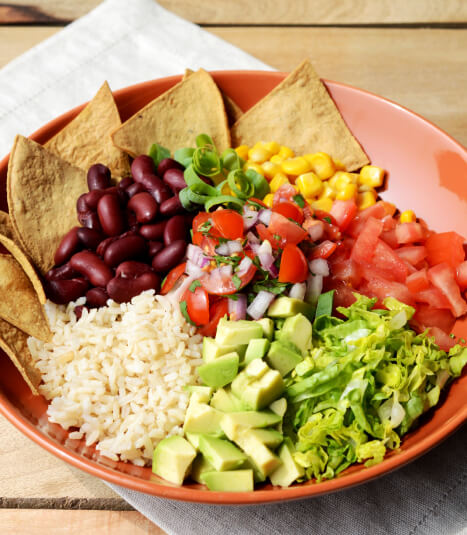
Asking women to eat No Huevos Rancheros for breakfast, Festive Dal Soup for lunch, and for dinner, Thai Green Curry Rice (all recipes prepared on the new DVD, McDougall Made Irresistible) should be the first and foremost recommendation received by a women if she’s concerned about breast cancer prevention or treatment. She is entitled to this from her professional medical team.
1) Tuttle TM, Habermann EB, Grund EH, Morris TJ, Virnig BA. Increasing Use of Contralateral Prophylactic Mastectomy for Breast Cancer Patients: A Trend Toward More Aggressive Surgical Treatment. J Clin Oncol. 2007 Oct 22; [Epub ahead of print],,
2) Lostumbo L, Carbine N, Wallace J, Ezzo J. Prophylactic mastectomy for the prevention of breast cancer. Cochrane Database Syst Rev. 2004 Oct 18;(4):CD002748.
Low-Fat Diet Reduces Ovarian Cancer
Low-fat dietary pattern and cancer incidence in the Women’s Health Initiative Dietary Modification Randomized Controlled Trial by Ross Prentice reported in the Journal of the National Cancer Institute found, ‘A low-fat dietary pattern may reduce the incidence of ovarian cancer among postmenopausal women.’ The relative reduction of ovarian cancer was about 40% achieved after 4 years. A total of 48,835 postmenopausal women were randomly assigned during 1993-1998 to a lower fat intervention or comparison group and followed up for an average of 8.1 years. The intervention goal was to reduce total fat intake to 20% of energy and to increase consumption of vegetables, fruits, and grains. The actual reduction in fat was to 29% of the calories.
Comment: Most women see no way to help reduce their risk of death from ovarian cancer. Early detection methods are ineffective and treatments result in little if any survival benefit. Worldwide population studies find a relationship of diet and ovarian cancer—women on a lower fat, higher plant-food based, lower-dairy food diets have less risk.
The Women’s Health Initiative Dietary Modification Randomized Controlled Trial cost $415 million and was very ineffective at modifying women’s diets. I have discussed this diet in relation to breast cancer in a past newsletter (See February 2006, Readers’ Responses to the Low-fat Diet Failure” News). The fact that this study showed any benefit at all from the feeble intervention diet prescribed is remarkable and worth reporting. We can only imagine what the consequences of feeding a truly healthy starch-based, low-fat (7% of calories) diet might have been for women.
Prentice RL, Thomson CA, Caan B, Hubbell FA, Anderson GL, Beresford SA, et al. Low-fat dietary pattern and cancer incidence in the Women’s Health Initiative Dietary Modification Randomized Controlled Trial. J Natl Cancer Inst. 2007 Oct 17;99(20):1534-43. Epub 2007 Oct 9.
Additives Impair Child’s Behavior
Food additives and hyperactive behaviour in 3-year-old and 8/9-year-old children in the community: a randomised, double-blinded, placebo-controlled trial by Donna McCann published in the September 5, 2007 issue of the Lancet found, ‘Artificial colors or a sodium benzoate preservative (or both) in the diet result in increased hyperactivity in 3-year-old and 8/9-year-old children in the general population… and that food additives exacerbate hyperactive behaviors (inattention, impulsivity, and overactivity) in children at least up to middle childhood. Increased hyperactivity is associated with the development of educational difficulties, especially in relation to reading, and therefore these adverse effects could affect the child’s ability to benefit from the experience of schooling. These findings show that adverse effects are not just seen in children with extreme hyperactivity (ie, ADHD), but can also be seen in the general population and across the range of severities of hyperactivity.’
In the study, 153 three-year-old and 144 eight and nine-year-old children drank a mixture containing sodium benzoate and one of two artificial food color and additives mixes (A or B) or a placebo mix. The additives chosen are commonly found in the food supply. Mix A for 3-year-old children included 20 mg of artificial food colorings (5 mg sunset yellow [E110], 2·5 mg carmoisine [E122], 7·5 mg tartrazine, and 5 mg ponceau 4R and 45 mg of sodium benzoate. Active mix B included 30 mg of artificial food colorings (7·5 mg sunset yellow, 7·5 mg carmoisine, 7·5 mg quinoline yellow, and 7·5 mg allura red AC) and 45 mg of sodium benzoate.
Comment: Food additives have long been suspected of causing overactive, impulsive, and inattentive behavior in children. Benjamin Feingold, MD described this effect of chemicals added to foods 32 years ago. Many of these children are eventually diagnosed as having Attention-Deficit Hyperactivity Disorder (ADHD) and then placed on mood-altering drugs, such as Ritalin, Adderall, Concerta, and Strattera.
Effects on a child’s behavior have also been found with dairy products,2 caffeine,3 and organic pollutants.4 Resulting illnesses and obesity from an unhealthy diet also have a profound effect on a child’s behavior and ability to learn. Therefore, before any child is declared incurably hyperactive, or otherwise behaviorally disturbed, a change to a starch-based diet with a strong emphasis on organic foods should be tried.
Children already on medications should have their diets improved, and the medications stopped or reduced under doctor’s supervision as they improve. Benefits should be evident with a few days to weeks. My experience leads me to state that parents who make an honest effort at this approach will not be disappointed.
1) McCann D, Barrett A, Cooper A, Crumpler D, Dalen L, Grimshaw K, Kitchin E, et al. Food additives and hyperactive behaviour in 3-year-old and 8/9-year-old children in the community: a randomised, double-blinded, placebo-controlled trial. Lancet. 2007 Sep 5; [Epub ahead of print]
2) Kaplan BJ, McNicol J, Conte RA, Moghadam HK. Dietary replacement in preschool-aged hyperactive boys. Pediatrics. 1989 Jan;83(1):7-17.
3) Hughes JR, Hale KL. Behavioral effects of caffeine and other methylxanthines on children. Exp Clin Psychopharmacol. 1998 Feb;6(1):87-95.
4) Lee DH, Jacobs DR, Porta M. Association of serum concentrations of persistent organic pollutants with the prevalence of learning disability and attention deficit disorder. J Epidemiol Community Health. 2007 Jul;61(7):591-6.
Recommended Articles

Giving Thanks

Making the Change to a Healthy Lifestyle Work, Part 1 - Why Change?

Join the Conversation!
Have a question, a helpful tip, or a story from your journey? Add it below - your voice matters.